Case 01Harmless
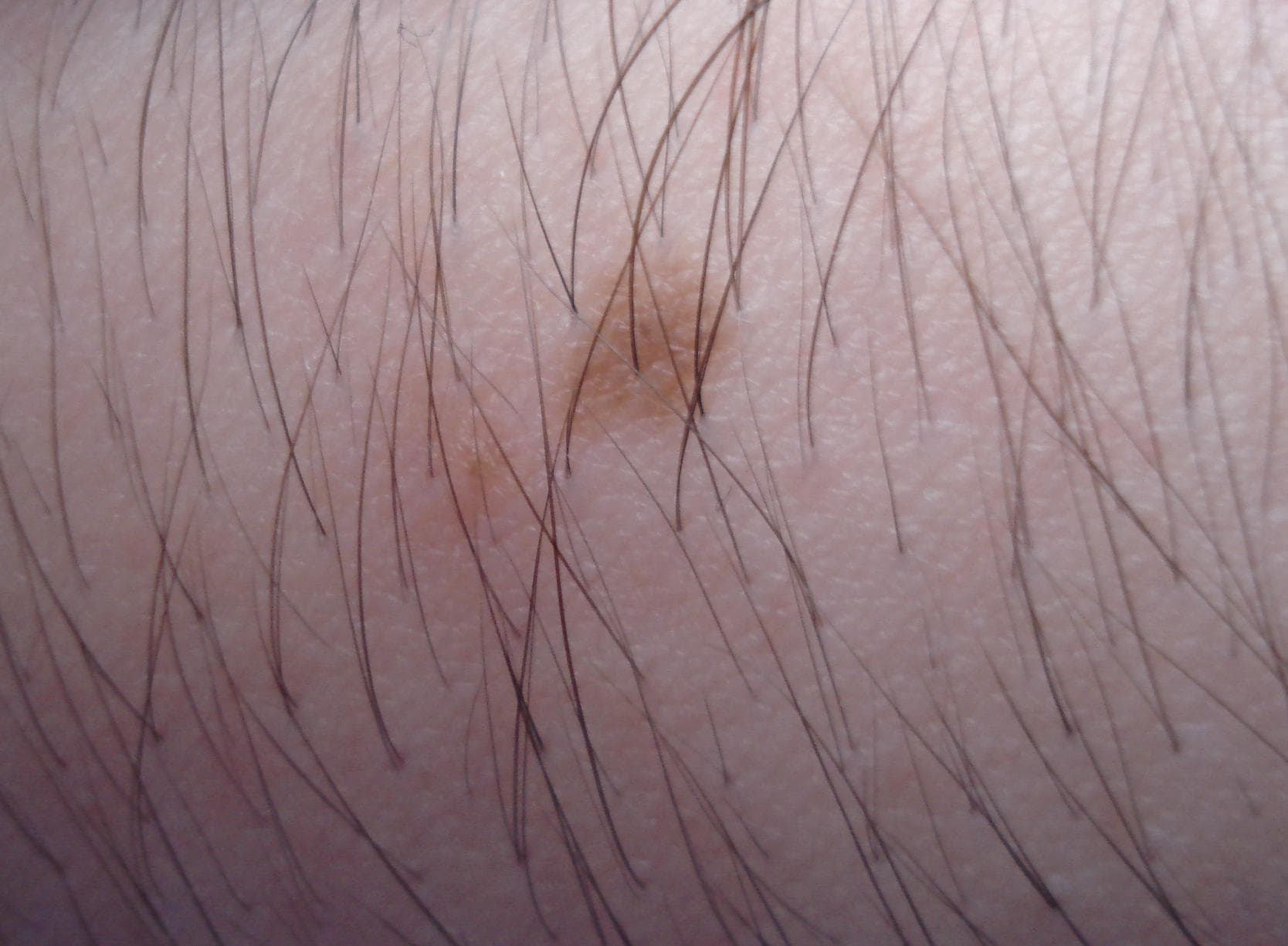
Normal mole
Uniform color, symmetrical, clear borders, smaller than 6mm. No cause for concern.
- Symmetrical
- Uniform color
- Smooth borders
- < 6mm diameter
Photograph suspicious moles with your smartphone. Our AI analyzes the risk in seconds - and, if you wish, a licensed dermatologist additionally reviews your image.
ABCDE-Analyse
Dermatolog:in
Beispiel-Ansicht
Skin cancer is one of the most common cancers worldwide, with millions of new cases diagnosed each year - and rates are rising. However, when caught early, melanoma, basal cell carcinoma and squamous cell carcinoma are curable in over 95% of cases. The key is recognising suspicious moles in time.
DermCheck combines specialised image AI models (Med-Foundation on RunPod) with Claude Vision to assess your mole in seconds using the ABCDE rule. If anything looks suspicious, you can request an optional second opinion from a licensed dermatologist - within 24 to 48 hours, GDPR-compliant and without an in-person visit.
The AI analysis is free, anonymous and does not replace a medical diagnosis. It helps you reach the right decision faster: whether to perform a self-examination, schedule a skin cancer screening with your GP, or seek a professional dermatoscopy.
Professional skin analysis in 3 simple steps
Photograph the suspicious skin area with your smartphone camera. Our app provides real-time feedback for optimal image quality.
Automatic sharpness and lighting check
Our trained AI analyzes your image in seconds using the ABCDE criteria and provides an immediate risk assessment.
Several image models assess the same photo independently of one another
Optional: A licensed dermatologist personally reviews your image and provides a well-founded medical assessment.
Response within 48 hours (express: 24 hours)
Learn the difference between harmless and suspicious moles
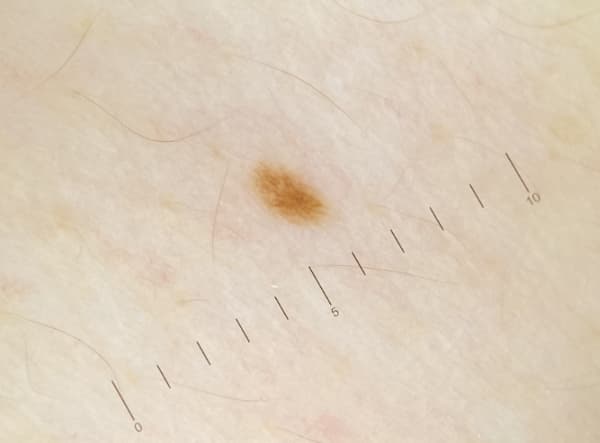
Uniform color, symmetrical, clear borders, smaller than 6mm. No cause for concern.
Irregular borders, multiple colors, asymmetric. Should be examined by a physician.
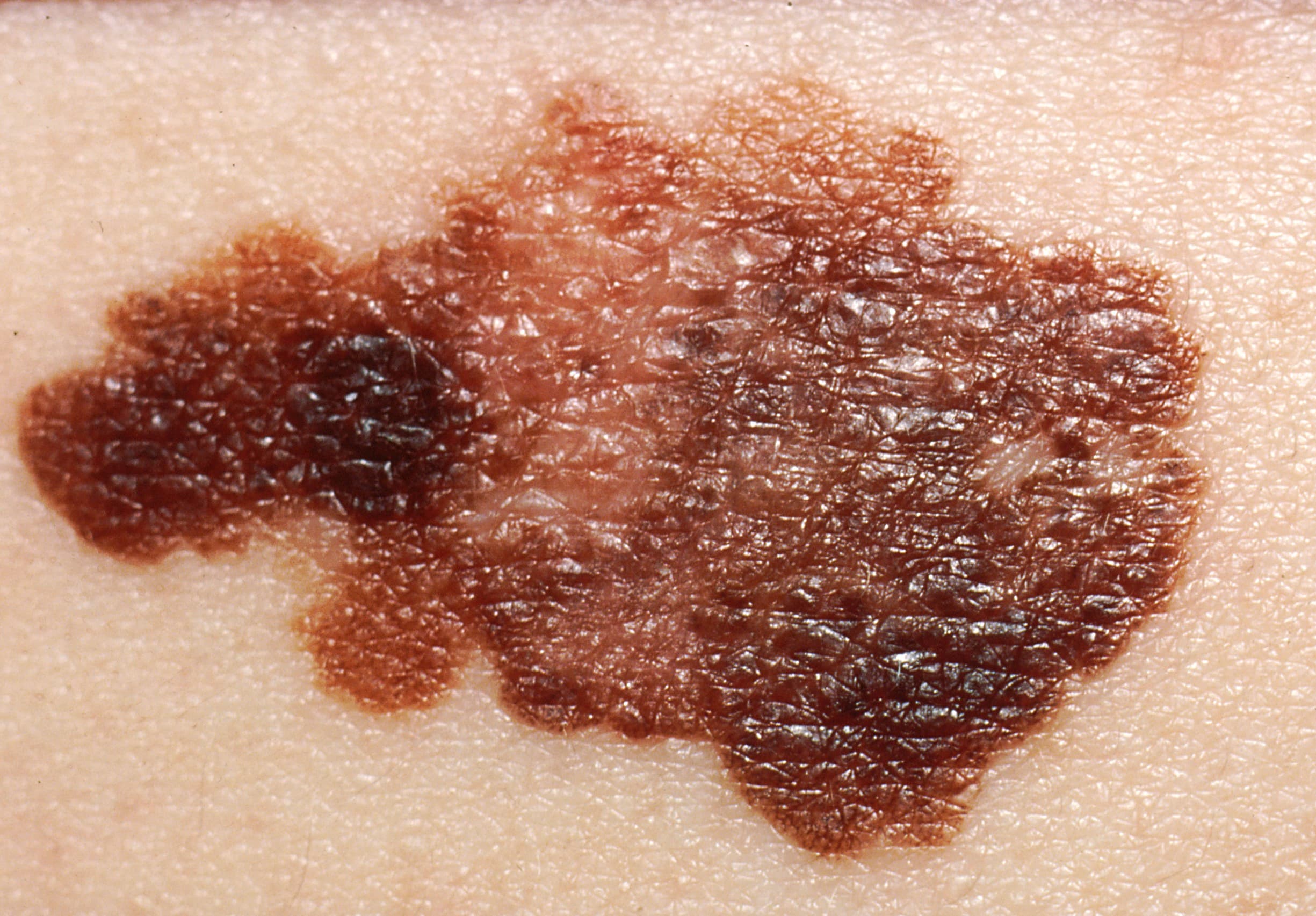
Highly irregular, multi-colored, blurry borders. Immediate medical examination recommended.
How to identify suspicious skin changes yourself
A mole that is not symmetrical - one half looks different from the other.
→ Asymmetrical moles are suspicious.
Blurry, ragged, or irregular edges instead of smooth, clearly defined borders.
→ Watch for jagged or blurry edges.
Different shades within a mole: brown, black, red, white, or blue.
→ Multi-colored moles are a warning sign.
Moles larger than 6mm (pencil eraser) are more suspicious.
→ Larger than 6mm = have it examined by a physician.
Any change in size, shape, color, or symptoms (itching, bleeding) is an alarm signal.
→ Always take changes seriously.
AI-assisted analysis, an optional doctor double-check, and rigorous data protection.
Several validated image models assess your mole in seconds using the ABCDE rule and provide a transparent risk estimate.
If you wish, you can also have your image assessed by a licensed dermatologist as a paid second opinion.
Your images are sensitive health data. We process them only with your explicit consent, encrypted and deletable on request.
Optional medical reviews are carried out by dermatologists who state their medical license number when registering and whose details we check manually before activation. Your data is processed in compliance with the GDPR.
Skin cancer is the most common type of cancer worldwide - but early detection saves lives
0+
New cases per year in Germany
Including basal cell and squamous cell carcinoma
~0
Melanoma cases per year
The most dangerous form of skin cancer
+50%
Increase over the past 20 years
Prevention is more important than ever
0%
Early detection (Stage I)
62%
Middle stage (II-III)
0%
Late detection (Stage IV)
Early detection increases the chance of survival by 6 times
Sources: Robert Koch Institute (German Centre for Cancer Registry Data), German Cancer Society and the DKFZ Cancer Information Service. Figures rounded, for information only and no substitute for medical advice.
Regular screening and sun protection drastically reduce the risk of skin cancer
80%
ReductionUV Protection
Sunscreen SPF 50+, protective clothing & avoid midday sun
50%
ReductionScreening
Regular skin cancer screening from age 35 (covered by insurance)
63%
ReductionSelf-examination
Monthly self-check using the ABCDE rule
Apply sunscreen SPF 50+ daily
Even on cloudy days - 80% of UV rays penetrate clouds
Avoid midday sun (11 AM - 3 PM)
UV exposure is highest during this time
Monthly self-examination
Check your moles using the ABCDE rule
Skin cancer screening every 2 years
Covered by insurance from age 35 - take advantage of it!
Wear protective clothing & a hat
UV-protective clothing offers the best protection
Avoid tanning beds completely
Increases melanoma risk by up to 75%
90% of all skin cancer cases are caused by UV radiation - and therefore preventable.
Current studies show: early detection and prevention are the most effective weapons against skin cancer
New cases per 100,000 population (age-standardized)
Proportion of melanomas by UICC stage at initial diagnosis
Risk reduction through various protective measures (based on meta-analyses)
The AI assessment and the advanced AI report are free for up to 5 photos per scan and need no account. A human opinion on top is paid once — there is no subscription.
One-time payment, no subscription, no automatic renewal. As a small business under Section 19 of the German VAT Act (UStG) no VAT is charged or shown. DermCheck is not a medical device and does not replace a visit to a doctor.
Answers about AI skin analysis, accuracy and data protection
The initial AI analysis is free – including the advanced AI report for up to 5 photos. From the 6th photo the report costs a one-time €4.99; a professional physician review starts at €19.99.
Swipe to experience the doctor review process