UV Radiation & Skin Cancer: Effective Protection with DermCheck
Learn about UV radiation, skin cancer risks, prevention, and how modern tools like DermCheck help protect your skin health.
Publikovane 2026-03-16 · DermCheck Editorial
Tento článok bol vytvorený s pomocou umelej inteligencie.
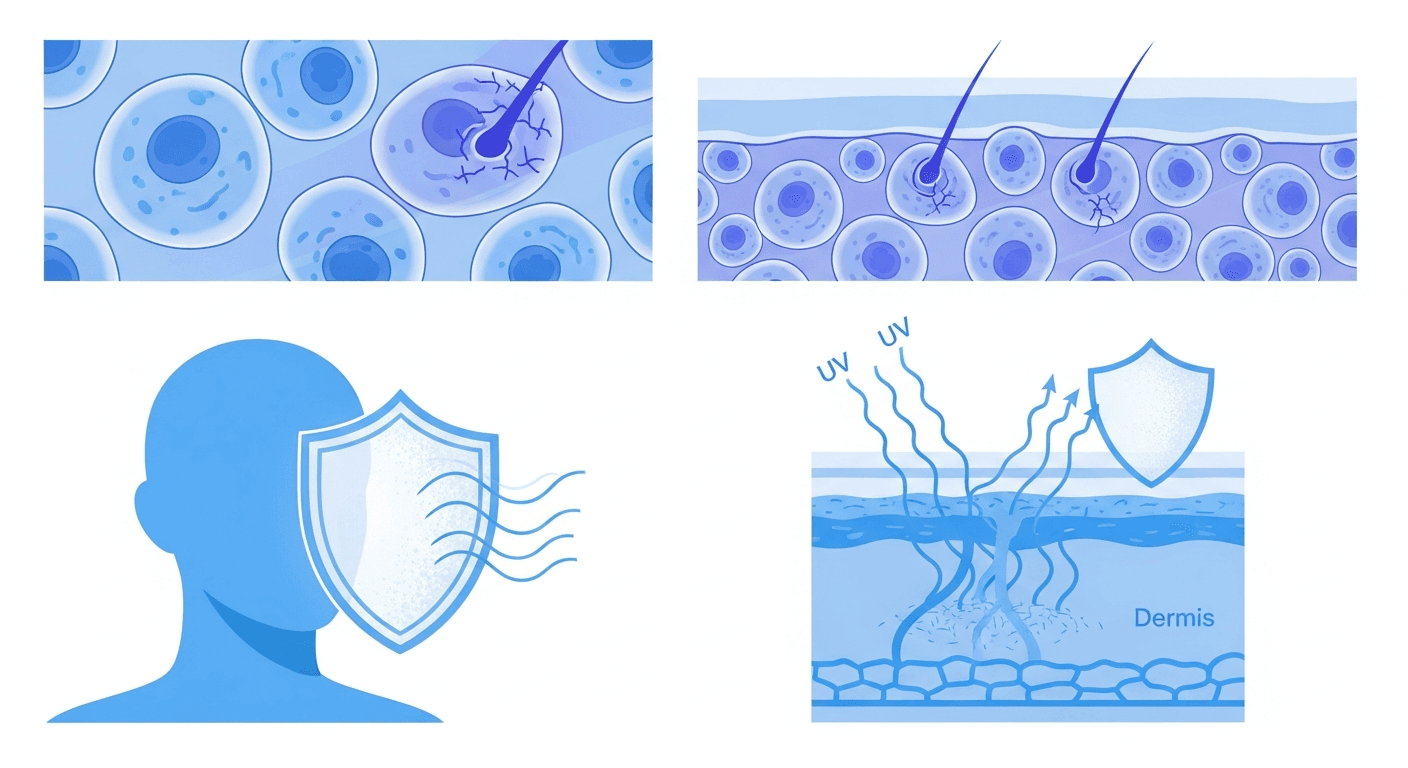
The Hidden Danger of the Sun: Why Skin Cancer Prevention is Crucial
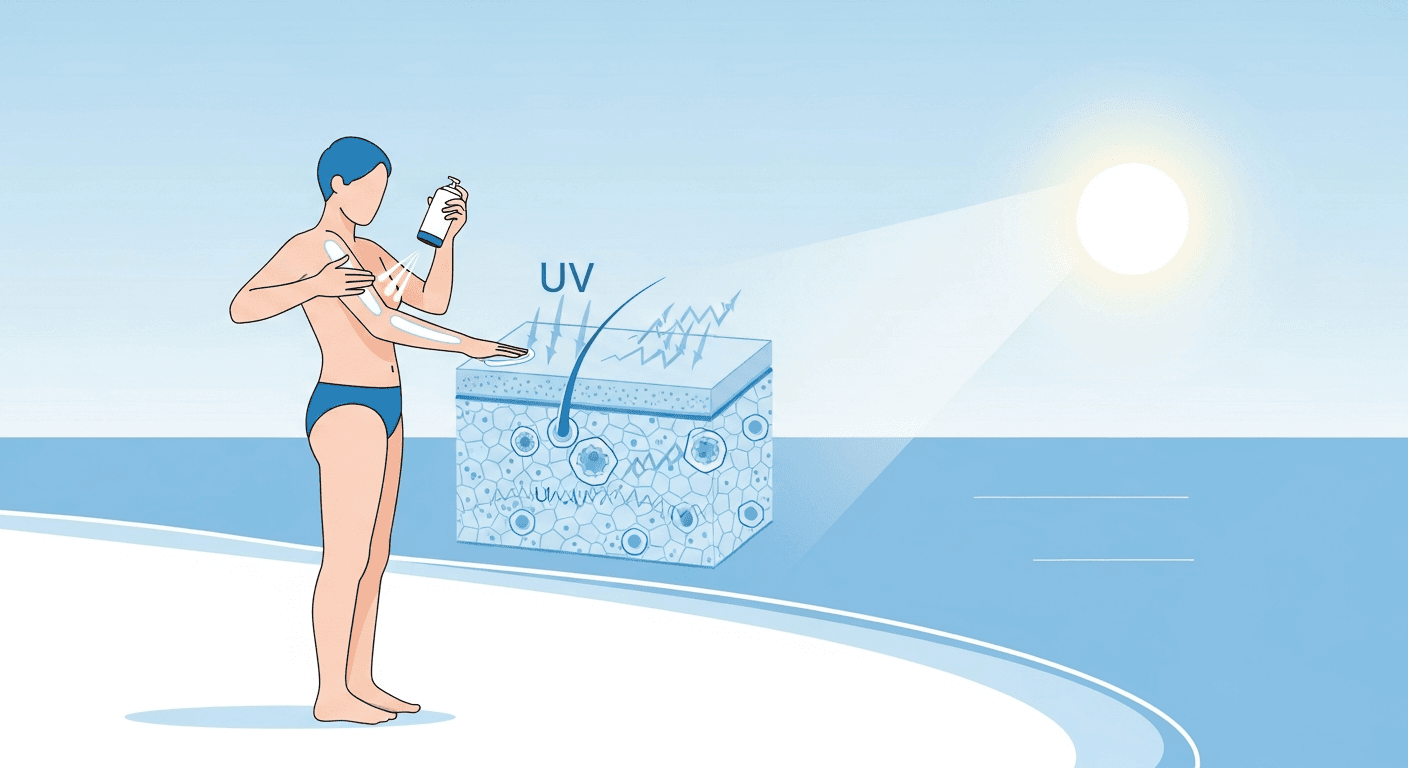
The sun is a source of life and brings us well-being, yet its ultraviolet (UV) rays pose a serious threat to our skin: skin cancer. As dermatologists and SEO experts, we know that education and effective sun protection are the best weapons in the fight against this disease. Every year, hundreds of thousands of people are diagnosed with skin cancer, and the trend is rising. This development underscores the urgency of taking preventive measures and detecting suspicious skin changes early. The aim of this article is to provide you with a comprehensive overview of the mechanisms of UV damage, current risks, and the latest findings in prevention and treatment. We will explore how you can effectively protect your skin and how innovative technologies like the DermCheck App are revolutionizing skin cancer early detection.
Skin cancer prevention is not a cosmetic concern; it is a fundamental pillar of your health care. Your skin is your largest organ and deserves the best protection. Especially at a time when outdoor activities are becoming increasingly popular and sun exposure may intensify due to climate change, sound knowledge about the dangers and protective options is essential. Stay informed, protect yourself, and use modern tools for your skin health.
UV Radiation Under the Microscope: UVA and UVB – The Invisible Attackers

The solar radiation that reaches our Earth consists of various components, with UV rays being of paramount importance for our skin health. We mainly distinguish between two types of UV rays that reach us: UVA and UVB radiation.
- UVA Radiation (320-400 nm): These long-wave rays penetrate deeper into the skin, reaching the dermis. They are the primary cause of skin aging (photoaging), as they damage collagen and elastin fibers, leading to wrinkles and a loss of skin elasticity. UVA rays also significantly contribute to the development of skin cancer by indirectly causing DNA damage and weakening the skin's immune system. They are present all year round, even on cloudy days and through window glass.
- UVB Radiation (280-320 nm): The shorter-wave UVB rays primarily reach the upper layers of the skin (epidermis). They are the main cause of sunburn and direct DNA damage, which can induce mutations in skin cells. UVB radiation plays a crucial role in the development of all forms of skin cancer, especially malignant melanoma.
Damage from UV radiation is a cumulative process. Every unprotected exposure to the sun, every sunburn, leaves traces in the genetic material of our skin cells. If these damages can no longer be effectively repaired, uncontrolled cell growth occurs – the beginning of skin cancer development. Therefore, consistent protection against both types of UV radiation is essential for skin cancer prevention.
Skin Cancer in Numbers: Alarming Trends in Germany (2023-2026)
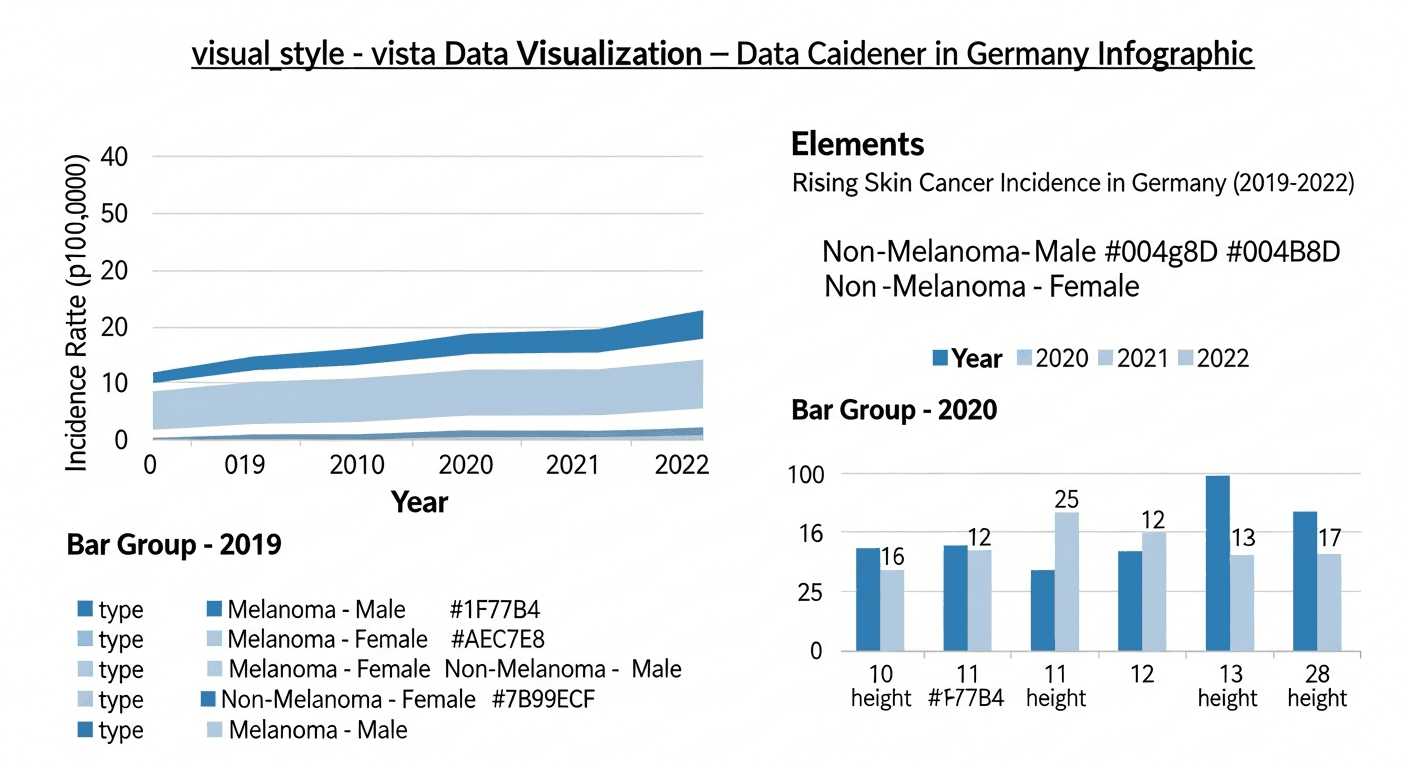
The incidence of skin cancer, particularly malignant melanoma, shows a continuous increase worldwide and in Germany. This alarming development underscores the urgency of strengthening effective prevention strategies. A study by the Central Institute for Statutory Health Insurance in Germany (Zi) from July 2024 revealed that in 2022, approximately 32,000 insured individuals in Germany aged 35 and over were diagnosed with malignant melanoma for the first time. This corresponds to a 4% increase in incidence between 2019 and 2022, which could partly be attributed to catch-up effects after the COVID-19 pandemic, as fewer skin cancer screenings were performed during that period.
The incidence rate for women aged 35 and over was 70 new cases per 100,000 people, while for men in the same age group it was 78 new cases per 100,000 people, representing a 10 percent higher risk of illness. The average age of onset for women is 63 years and for men 69 years. For non-melanoma skin cancer (white skin cancer, such as basal cell and squamous cell carcinomas), approximately 137,700 new cases are recorded annually in Germany. Since the 1970s, the incidence of malignant melanoma in Germany has more than quintupled. These figures highlight the importance of consistent skin cancer prevention and early diagnosis to reverse this worrying trend.
Risk Factors and the Power of Early Detection
Who is particularly at risk of developing skin cancer? There are various risk factors that increase personal risk. These include fair skin types (Type I and II), a high number of moles (more than 50), a family history of skin cancer, and especially severe sunburns in childhood and adolescence. Individuals who are immunosuppressed or have previously had skin cancer are also at increased risk. For all risk groups, but also for the general population, early detection of skin cancer is of crucial importance, as it significantly improves healing chances.
A fundamental step in early detection is regular self-examination of the skin. Monthly, you should check your entire skin for new or changing moles and skin alterations. The ABCDE Rule, a simple scheme for assessing potentially suspicious moles, can help you with this: A for Asymmetry, B for Border (irregular), C for Colour (uneven), D for Diameter (over 5 mm), and E for Evolution (change over time). In case of uncertainties or the appearance of new, altered spots, consulting a dermatologist is essential. Regular skin cancer screening by a specialist, to which insured individuals in Germany aged 35 and over are entitled every two years, is an indispensable pillar of prevention and early detection.
The Dermatologist as a Guide: Medical Guidelines for Comprehensive Protection
Given the rising case numbers, medical professional societies such as the German Dermatological Society (DDG) and the Oncology Guidelines Program have developed comprehensive guidelines and recommendations. These serve as a standard for the prevention, diagnosis, and treatment of skin cancer and provide clear orientation for both doctors and patients. The S3 guideline 'Prevention of Skin Cancer' (currently under revision, Version 2.0 valid until 2026) emphasizes a multi-stage approach that is essential for effective sun protection.
- Avoid sunburn: This is the most important single measure, as sunburn, especially in youth, significantly increases the risk of skin cancer.
- Avoid midday sun: Between 11 AM and 3 PM, UV radiation is most intense. During this time, you should stay in the shade or indoors as much as possible.
- Wear protective clothing: Tightly woven clothing, wide-brimmed hats, and sunglasses with UV protection offer excellent physical protection.
- Use sunscreen: Sunscreen with a high sun protection factor (SPF) should be generously and regularly applied to all exposed skin areas.
- Regular skin cancer screening: For individuals aged 35 and over, biennial screening by a dermatologist is recommended.
These medical recommendations form the roadmap for responsible sun exposure and are crucial for skin cancer prevention and your long-term skin health. Consistent implementation of these measures significantly minimizes the risk.
Your Personal Sun Protection Plan: From Cream to Clothing
Effective sun protection is a combination of various measures that you can integrate into your daily life. The right sunscreen is just one component, but a very important one:
- SPF 30 or 50+: Always choose a broad-spectrum sunscreen that protects against both UVA and UVB rays. The Sun Protection Factor (SPF) should be at least 30, ideally 50+. Look for indications such as "broad-spectrum" or "UVA/UVB protection."
- Sufficient quantity: Apply a generous amount. For an adult's entire body, about 30-40 milliliters or approximately 40 grams of sunscreen are needed (about six teaspoons). For the face and neck alone, about one teaspoon is necessary. The "11-finger rule" can provide good guidance for determining the correct amount per body region.
- Regular reapplication: Renew protection every two hours and always after swimming, heavy sweating, or towel drying, even if the product is advertised as water-resistant. Reapplying maintains the protection but does not extend the maximum protection time.
- Timing: Apply sunscreen 15 to 30 minutes before going outdoors so that the product can fully take effect.
But not only cream protects. Clothing as UV protection is one of the most effective barriers: Tightly woven fabrics (cotton, linen) and special UV protective clothing with a declared UPF (Ultraviolet Protection Factor) of 30+ or 50+ are ideal. A wide-brimmed hat protects your face, ears, and neck, and sunglasses with 100% UV protection (UV 400) are essential for your eyes. The combination of these measures offers the best protection against UV radiation and supports your skin cancer prevention.
AI as a Game Changer: How DermCheck Revolutionizes Your Skin Health
In skin cancer early detection, the use of Artificial Intelligence (AI) marks a real turning point. Algorithms trained with vast datasets of dermoscopic images can classify skin lesions with high accuracy and help identify suspicious changes early. The DermCheck App leverages this advanced technology to provide you with a convenient and accessible tool for monitoring your moles. Studies from 2023 and 2024 show that AI systems can achieve similar or even higher accuracy than experienced dermatologists in some cases, especially when it comes to recognizing patterns and identifying anomalies. Systems that create both two-dimensional (2D) and three-dimensional (3D) overview images can significantly improve the specificity and sensitivity of diagnostics. The advantages are clear: an AI-powered app can draw attention to potentially critical areas that might otherwise go unnoticed, leading to faster medical consultation. This is particularly important for melanoma early detection, where time plays a crucial role.
Important note: It is essential to understand that the DermCheck App or other AI systems do not replace a doctor's visit. They are valuable tools for self-monitoring and raising awareness of skin changes. The final diagnosis and treatment decision always remain the responsibility of a qualified dermatologist. Use DermCheck as an intelligent companion for your skin health, but maintain regular contact with your specialist.
Innovative Therapies: A Glimmer of Hope in the Fight Against Advanced Skin Cancer
Research and development in skin cancer treatment have made enormous progress in recent years, especially for malignant melanoma. These new approaches offer patients with advanced diseases significantly improved survival and quality of life prospects:
- Immunotherapy: Medications such as immune checkpoint inhibitors (e.g., pembrolizumab, nivolumab) activate the body's own immune system to recognize and destroy cancer cells. They have revolutionized the treatment of advanced melanoma and are increasingly used in adjuvant (after surgery) and neoadjuvant (before surgery) settings.
- Targeted Therapies: For patients with a specific gene mutation (BRAF mutation, which occurs in about half of melanomas), targeted medications (BRAF and MEK inhibitors like vemurafenib, dabrafenib, cobimetinib) can be used. These block specific signaling pathways in cancer cells, leading to targeted cell death. Combination therapies have proven particularly effective.
- Electrochemotherapy: This method is primarily used for locally advanced or metastatic skin tumors that are inoperable. It combines a chemotherapeutic agent with electrical pulses to increase the uptake of the medication into tumor cells.
- Topical Therapies: For early stages of non-melanoma skin cancer (basal cell and squamous cell carcinomas), there have been advances in topical creams (e.g., imiquimod, 5-fluorouracil) and photodynamic therapy (PDT), which can represent a gentle alternative to surgery.
These diverse and increasingly precise treatment options offer new hope in the fight against skin cancer and demonstrate the dynamic development in dermatological oncology. Continuous research leads to ever better prognoses and quality of life for those affected.
UVI and Shade: Smart Behaviors in Everyday Life
In addition to sunscreen and clothing, correct behavior outdoors plays a crucial role in your skin cancer prevention. An important tool is the UV Index (UVI), an internationally standardized measure for the sunburn-effective solar irradiance. The higher the UVI, the faster health damage can occur to unprotected skin.
- Observe UVI: Inform yourself daily about the local UVI (e.g., via weather apps or the Federal Office for Radiation Protection) and adjust your protective measures accordingly.
- Seek shade: Between 11 AM and 3 PM, UV intensity is highest. During this time, it is preferable to stay in the shade. Keep in mind that even in the shade, up to 50% of UV radiation can still reach your skin, so additional protective measures are still advisable.
- Avoid tanning beds: Tanning beds increase the risk of malignant melanoma and accelerate premature skin aging. They are not a healthy "preparation" of the skin for the sun.
- Special protection for children: Children's skin is many times thinner and more sensitive than adult skin and cannot yet produce enough pigments. Babies and toddlers should never be exposed to direct sunlight. For them, sun-protective clothing with a high UPF, wide-brimmed hats, and mineral sunscreens (with zinc oxide or titanium dioxide) are the best choice.
Through conscious behavior and consideration of the UVI, you can significantly reduce your exposure to harmful UV radiation and thus actively contribute to your skin health.
Conclusion: Actively Caring for Your Skin Health – Today and Tomorrow
Skin cancer is a serious disease whose incidence continues to rise. The good news, however, is that most cases can be avoided through consistent sun protection and successfully treated with early detection. Recent studies and medical guidelines confirm the need not to underestimate UV radiation and to take preventive measures seriously.
From the correct application of sunscreens, wearing protective clothing, and avoiding the midday sun, to regular self-examination and professional skin cancer screening – every single step counts in the fight against skin cancer. The integration of modern technologies such as the DermCheck App into your routine offers an additional layer of security and awareness by helping you proactively monitor your skin and consult a dermatologist in good time if necessary.
Actively protect your skin – it is the largest organ of your body and deserves your full attention and care. Stay informed, act preventively, and take advantage of modern skin cancer early detection. Your long-term health will thank you for it!