Squamous Cell Carcinoma: Risks, Symptoms & AI Screening
Learn about cutaneous squamous cell carcinoma: risk factors, symptoms, modern therapies, and how AI revolutionizes early detection.
Julkaistu 2026-03-16 · DermCheck Editorial
Tämä artikkeli on laadittu tekoälyn avulla.
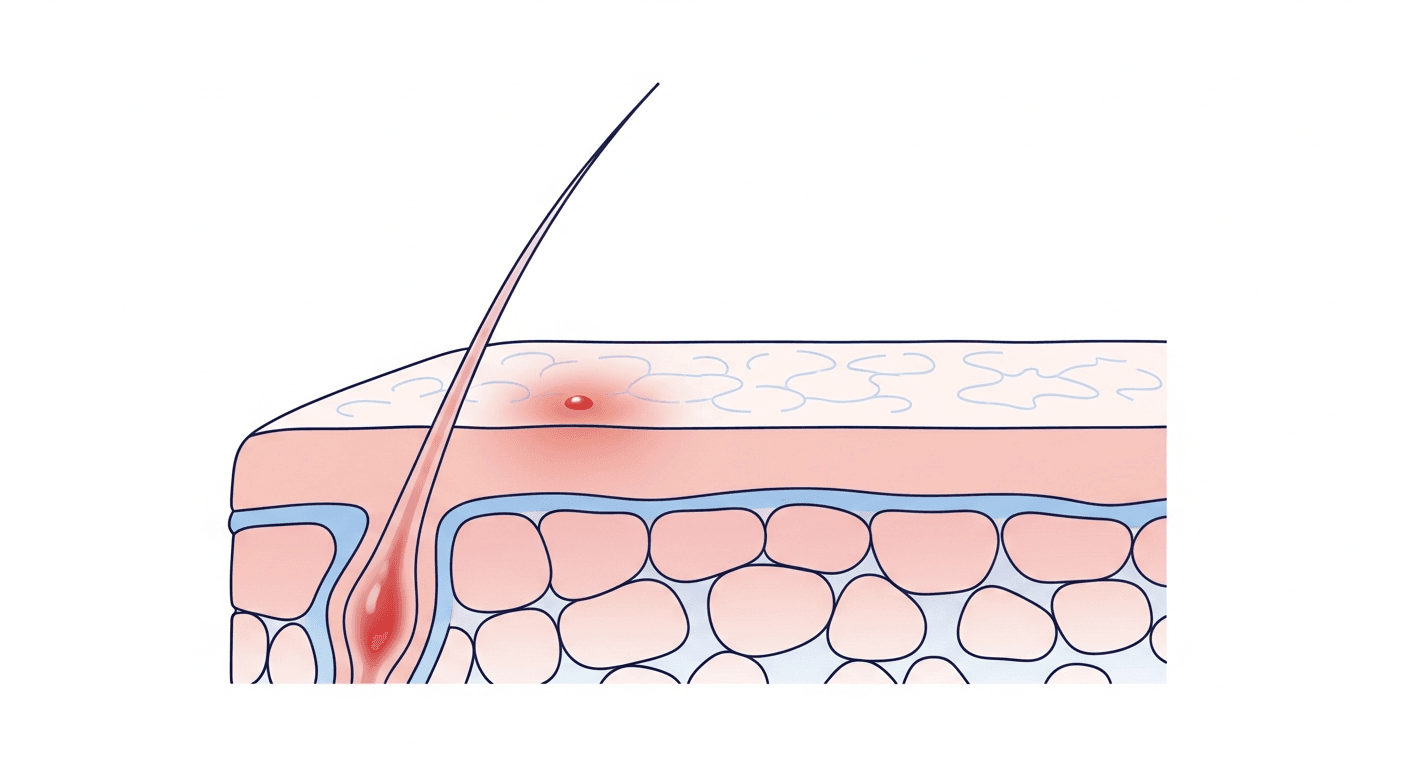
Introduction: Cutaneous Squamous Cell Carcinoma in DermCheck's Focus
Cutaneous Squamous Cell Carcinoma (cSCC), often known as spinalioma or prickle cell carcinoma, is the second most common type of non-melanoma skin cancer after basal cell carcinoma. Despite being highly treatable when detected early, advanced cSCC can cause significant morbidity and, in rare cases, be life-threatening. The continuously rising incidence makes a solid understanding of risk factors, symptoms, and modern therapies indispensable.
As your partner in skin cancer early detection, DermCheck leverages innovative AI technologies to provide optimal support to you and your dermatologist. This article comprehensively covers various aspects of squamous cell carcinoma, illustrating how advancements in medicine and Artificial Intelligence contribute to improving diagnosis and treatment.
This blog article is for informational purposes only and does not replace professional medical advice, diagnosis, or treatment by a qualified physician. Always rely on the advice of your doctor or other medical professionals for health questions.
What is Cutaneous Squamous Cell Carcinoma (cSCC)?
Squamous cell carcinoma is a malignant tumor that originates from keratinocytes, the main cells of the epidermis (outer skin layer). It belongs to the group of non-melanoma skin cancers and can develop on both skin and mucous membranes. Unlike basal cell carcinoma, cSCC has the potential to metastasize, although this is relatively rare. The development of cSCC is often a long-term process, typically evolving from precursor lesions such as Actinic Keratosis.
Timely detection and treatment are crucial to prevent the spread of the carcinoma and maximize cure rates. Histopathological examination of a tissue sample is the gold standard for definitive diagnosis and to determine the tumor's aggressiveness. For more information on the definition and differentiation from other tumor types, refer to the iuvando Health Lexicon (German source, general information).
Incidence and Development: Epidemiological Data on cSCC
Epidemiological data on cutaneous squamous cell carcinoma show a worrying trend: its incidence has been steadily increasing for years. In Germany, it is the second most common malignant skin tumor. According to estimates from the German Cancer Information Service (DKFZ), almost 50,000 adults, including 29,300 men and 20,100 women, developed cSCC in 2014. More recent data for Germany from Gelbe Liste (German medical information portal) and the Schleswig-Holstein Cancer Registry (German source, regional data) indicate around 60,000 new cases per year.
Age-standardized incidence rates in Germany range from 20/100,000 to 32/100,000 inhabitants per year, depending on the region. The elderly population is particularly affected, with the average age at diagnosis being around 70 years. Men are generally more frequently affected than women, often due to higher occupational UV exposure. The Center for Cancer Registry Data at the RKI (German source, national cancer data) predicts a further doubling of non-melanoma skin cancer incidence by 2030.
The metastasis rate of squamous cell carcinoma is comparatively low, at 3-6%, but can be higher for large tumors or in immunosuppressed patients, posing a particular therapeutic challenge. Metastasis almost always occurs via lymphatic pathways. In 2021, 1,180 deaths from non-melanoma skin cancer were recorded in Germany, highlighting the importance of early detection. Comprehensive reports on the epidemiology of skin cancer can be found in the German Health Reporting (RKI) (German source, health data).
The S3 Guideline: The Compass for Diagnosis and Therapy
In Germany, the treatment of cutaneous squamous cell carcinoma is largely guided by the S3 Guideline "Actinic Keratosis and Cutaneous Squamous Cell Carcinoma" (AWMF registry number: 032/022OL). Developed under the leadership of the German Dermatological Society (DDG) and the German Working Group for Dermatological Oncology (ADO), this guideline represents the evidence-based standard for diagnosis, therapy, and follow-up care. The latest version from January 2023 incorporates the most recent scientific findings and clinical experiences. A press release from the German Cancer Society (German source) provides information on the update.
The guideline emphasizes the importance of precise diagnostics, which includes histopathological confirmation via biopsy beyond clinical assessment. For the treatment of invasive cSCC, complete surgical removal (R0 resection) of the tumor with histological control of the surgical margins is the gold standard. It also provides detailed recommendations for follow-up care, aimed at identifying high-risk patients, and for primary skin cancer prevention.
It serves as an essential reference for both doctors and patients and is published by the Oncology Guidelines Program of the AWMF, German Cancer Society (DKG), and German Cancer Aid (DKH). Further information can also be found on the websites of the DDG and the ADO.
Risk Factors in Detail: Who Is Particularly at Risk?
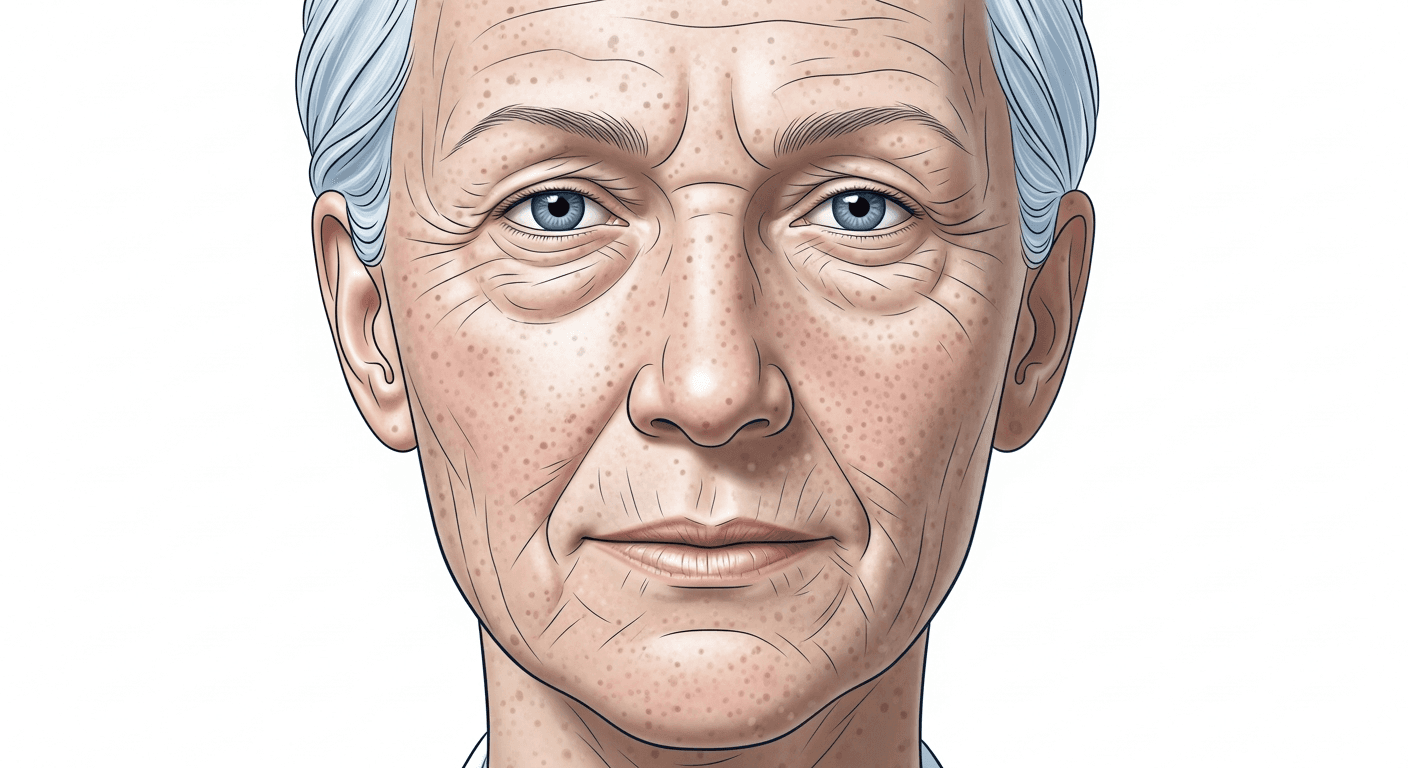
Understanding risk factors is crucial for effective prevention of squamous cell carcinoma. The most important and preventable factor is UV light exposure. The cumulative lifetime UV dose, both from natural sunlight and tanning beds, significantly increases the risk. The World Health Organization (WHO) strongly warns against the consequences of excessive UV radiation.
Another significant risk factor is Actinic Keratoses, considered obligate precursors to cSCC. Approximately 1-5% of these rough, scaly skin lesions can progress to invasive cSCC, with the risk being significantly higher in immunosuppressed patients, as extensively described in StatPearls. Immunosuppressed individuals, for example after organ transplants, have up to a 250-fold higher risk of developing cSCC.
Other risk factors include skin type (fair skin is more susceptible), age and gender (risk increases with age, men are more frequently affected), chronic skin damage (scars, wounds, burns), occupational exposure to carcinogens (e.g., polycyclic aromatic hydrocarbons, arsenic), and certain genetic factors (e.g., albinism). Lifestyle factors such as smoking and excessive alcohol consumption can also increase the risk. A comprehensive overview can be found on the ONKO-Internetportal of the German Cancer Society (German source, patient information).
Look for rough, scaly, or crusty patches of skin, especially on sun-exposed areas like the face, bald scalp, ears, or back of the hands. These could be actinic keratoses, which are precursors to squamous cell carcinoma. Early treatment can prevent their progression to invasive cancer.
Recognizing Symptoms: What Squamous Cell Carcinoma Looks Like
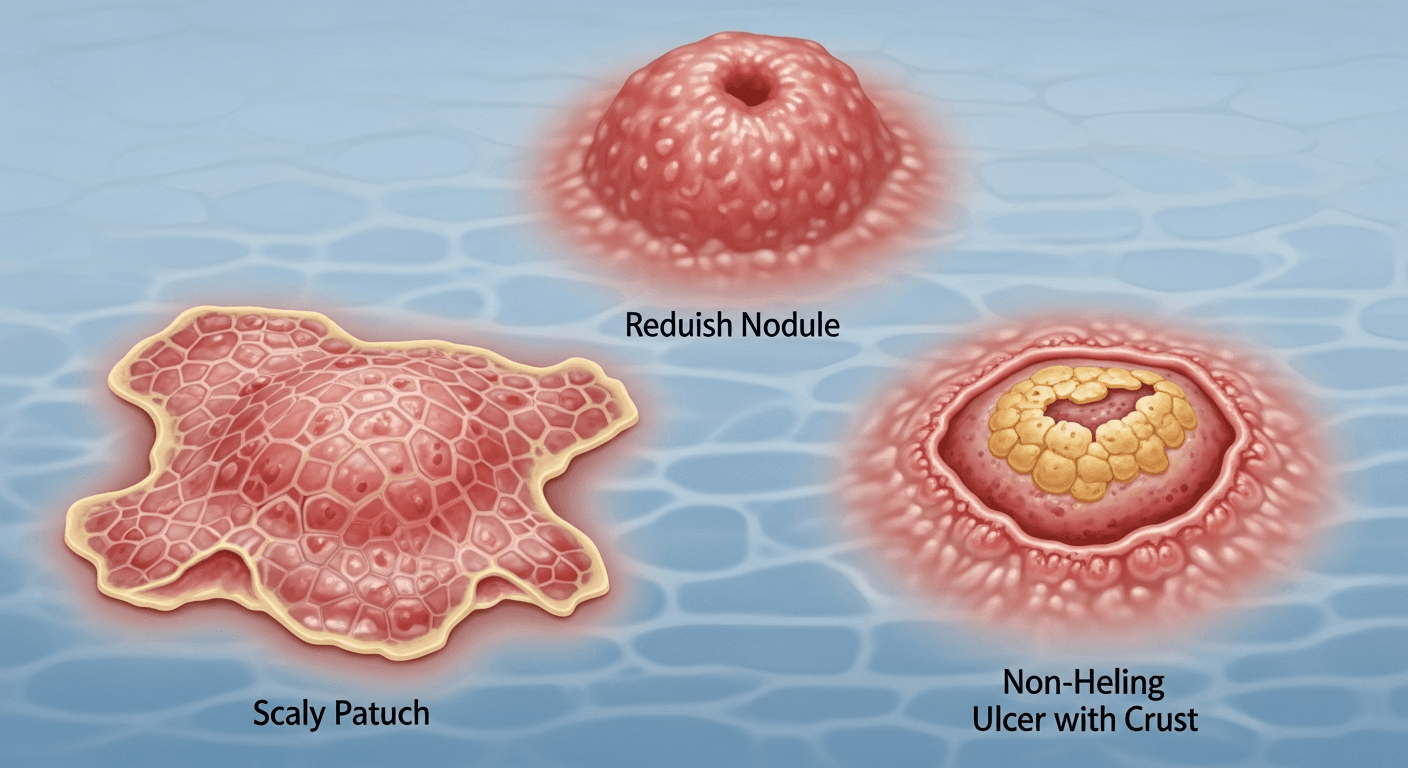
Squamous cell carcinoma can vary greatly in appearance, which can make diagnosis difficult for laypeople. It typically develops on highly sun-exposed areas of the body such as the face, ears, hands, or forearms. The changes can begin subtly and grow over time. Common symptoms to watch out for include:
- A **firm, reddish nodule** or a raised lesion that grows over time.
- A **scaly patch** or a **non-healing ulcer** that may be crusted and bleed easily.
- A **thickened area of skin** that feels rough to the touch.
- Some forms of cSCC, especially keratoacanthoma, can appear as a **fast-growing, dome-shaped tumor** with a central crust, which later forms a depression.
It is crucial to take any new or changing skin lesions seriously and consult a dermatologist promptly. Even seemingly harmless wounds that do not heal for weeks or months should be medically evaluated. The German Cancer Aid (German source, brochure) provides valuable tips for early detection of skin cancer with images. Further illustrative information on symptoms and diagnostics can be found in the patient brochure on cSCC (German source).
Early Detection is Key: Skin Cancer Screening and Self-Examination

Given the rising incidence of squamous cell carcinoma and the good cure rates with early diagnosis, early detection is crucial. In Germany, individuals aged 35 and older are entitled to a skin cancer screening every two years, performed by a dermatologist or a trained general practitioner. This examination allows for early identification of suspicious skin changes, even before they cause symptoms or spread.
In addition to professional screening, regular self-examination of the skin is an important part of prevention. Check your entire skin, including hard-to-reach areas such as your back, scalp, and soles of your feet, for new or changing lesions. Pay attention to the symptoms mentioned above and always seek medical advice if you are unsure. Tools like DermCheck can play a supportive role here by providing an initial assessment and, if necessary, directing you to a specialist.
The Patient Guideline for Cutaneous Squamous Cell Carcinoma (German source) from the German Cancer Aid also emphasizes the relevance of early detection and offers easily understandable information for affected individuals. The campaigns of the German Cancer Aid, such as "Skin Cancer: Recognize It. Early Detected, Skin Cancer is Curable" (German source), underscore this message.
Diagnostic Pathways: From Clinical Examination to Histopathology
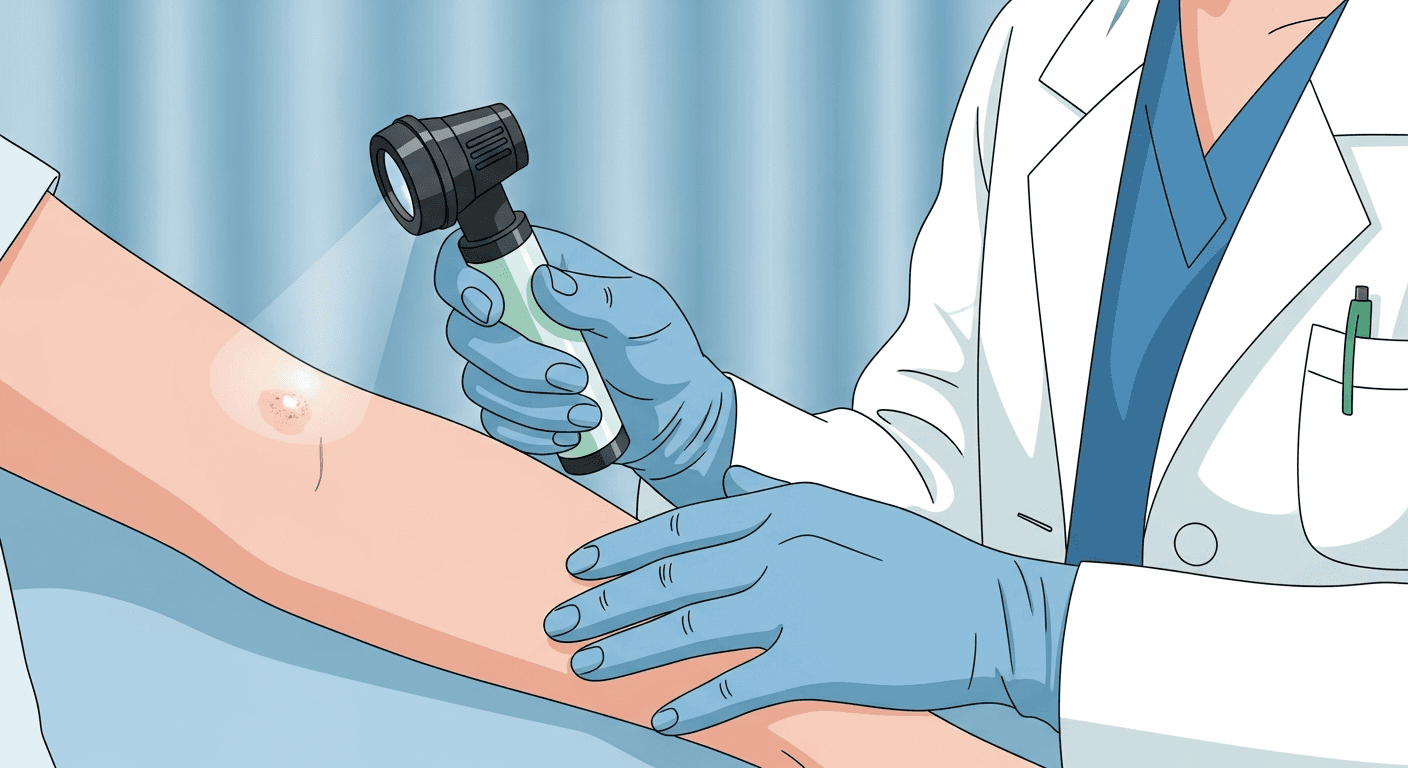
The diagnosis of squamous cell carcinoma typically begins with a thorough clinical examination by an experienced dermatologist. During this, suspicious skin changes are visually assessed and analyzed in more detail using dermoscopy. Dermoscopy allows a view into deeper skin layers and helps distinguish between benign and malignant lesions. However, a histopathological examination is essential for a definitive diagnosis.
This involves taking a small tissue sample (biopsy) from the suspicious area and examining it under a microscope by a pathologist. This analysis not only confirms the diagnosis of squamous cell carcinoma but also provides important information about the tumor type, depth of invasion, and aggressiveness. If metastasis is suspected, especially for tumors thicker than 2 mm or in high-risk locations, supplementary imaging procedures such as an ultrasound of the regional lymph nodes, or in advanced cases, a computed tomography (CT) or magnetic resonance imaging (MRI) may be used. The recent study "Squamous cell carcinoma: 2021 updated review of treatment" provides an overview of diagnostic methods.
The S3 guideline explicitly does not recommend tumor markers for cutaneous squamous cell carcinomas, as no specific marker exists, even though elevated LDH levels may occur in advanced stages. The goal is always a precise and reliable diagnosis to initiate the best possible therapy. Further current insights into diagnostics can be found in the review in Cancers (Basel).
Standard Therapy: Surgical Removal (R0 Resection)
The primary and established standard therapy for cutaneous squamous cell carcinoma is complete surgical removal, also known as R0 resection. This means the tumor is removed with an adequate safety margin in healthy tissue, and the surgical margins are histologically tumor-free. This procedure is often performed under local anesthesia and aims to completely eliminate the cancer while preserving as much surrounding healthy tissue as possible.
Of particular importance is micrographically controlled surgery, such as Mohs surgery or 3D histology (also known as PDEMA). In these procedures, the excised tissue samples are immediately examined microscopically during the operation. This allows the surgeon to precisely re-excise until all tumor cells are removed, without sacrificing unnecessary healthy tissue. This is particularly important for tumors in aesthetically or functionally sensitive locations (e.g., face, hands), as well as for recurrences or aggressive tumors.
The S3 guideline emphasizes the importance of this precise technique to ensure complete removal and minimize the recurrence rate. After a successful R0 resection, the chances of cure are very good, especially for small and early tumors. The article "Cutaneous Squamous Cell Carcinoma – An Update" (German source, medical journal) in Aktuelle Dermatologie provides information on newer treatment strategies and surgical techniques.
An R0 resection (radical resection) means that a tumor has been completely removed with a margin of healthy tissue. Microscopic examination of the surgical margins reveals no remaining tumor cells. This is the goal of any surgical cancer treatment and a crucial factor for the chances of cure.
Advanced Treatment Approaches: Radiation Therapy and Systemic Therapies
A sole surgical removal is not always sufficient or possible. For locally unresectable tumors, inoperable patients due to comorbidities, or advanced carcinomas with a high probability of recurrence or metastasis, extended treatment approaches are used. Radiation therapy is an effective alternative or supplement to surgery. It is used for tumors that cannot be operated on due to their size or location, or as an adjuvant therapy after incomplete resection (R1 resection) to destroy remaining tumor cells.
Advances in radiotherapy now allow for more precise irradiation, sparing surrounding healthy tissue and minimizing side effects. For patients with locally advanced or metastatic cSCC for whom curative local therapy (surgery and/or radiation) is not an option, systemic therapies have rapidly evolved in recent years. In particular, immunotherapy has brought about a paradigm shift here and has established itself as a new standard of care. These systemic approaches work throughout the body and can reach cancer cells even in hard-to-access areas. A comprehensive literature review on the management of cutaneous squamous cell carcinomas can be found in "Management of cutaneous squamous cell carcinoma: A literature review and update" (2025).
Immunotherapy as a Revolution: Cemiplimab and New Combinations
The introduction of immunotherapy with checkpoint inhibitors has revolutionized the treatment of advanced cutaneous squamous cell carcinoma (cSCC), proving to be a true game-changer. The PD-1 inhibitor Cemiplimab (Libtayo®) is currently the only immunotherapy approved in the EU for adult patients with metastatic or locally advanced cSCC that cannot be curatively resected or irradiated. Studies have shown that Cemiplimab can lead to rapid and sustained tumor regression, even in elderly patients and in metastatic settings.
Particularly promising are the results for neoadjuvant and adjuvant immunotherapy. A study presented in November 2025 by Prof. Dr. med. Ulrike Leiter-Stöppke showed that patients receiving four cycles of Cemiplimab prior to surgical intervention achieved a pathological complete remission (pCR) in over 50% of those treated. Subsequent adjuvant therapy significantly improved the 3-year survival rate. The randomized Phase III study by Rischin et al. (data presented in 2025) also confirmed the clear superiority of Cemiplimab as adjuvant therapy after surgery or radiation compared to placebo.
Research continues towards combination therapies. A randomized Phase II study published in June 2025 in the Journal of Clinical Oncology reported promising data: an immunotherapy with an anti-PD-L1 antibody in combination with an anti-EGFR antibody was able to more than triple progression-free survival compared to immunotherapy alone in advanced cSCC. These developments open new perspectives for patients with advanced cSCC and significantly improve the prognosis.
Cemiplimab is a monoclonal antibody that binds to the PD-1 receptor on T-cells, blocking its inhibition by cancer cells. This re-enables the immune system to recognize and destroy cancer cells, leading to a targeted and effective fight against the tumor, especially in advanced squamous cell carcinomas.
Future Perspectives: Targeted Therapies and Research
Beyond immunotherapy, science is continuously exploring new ways to combat squamous cell carcinoma even more effectively. A promising field is targeted therapies, which specifically aim at molecular signaling pathways that play a role in cancer development and tumor growth. For instance, a recent study from the University of Turku in November 2023 showed that Plixorafenib (PLX8394), a drug under development for melanoma and lung cancer, can also halt the progression of cSCC by inhibiting the activity of several crucial signaling pathways simultaneously.
These drugs precisely intervene in the mechanisms of cancer cells, thereby specifically blocking tumor growth. Research also focuses on identifying new biomarkers that could enable even more individualized and precise therapy. The optimization of existing therapies through combinations or new forms of application is also the subject of intensive studies. The National Center for Tumor Diseases (NCT) Heidelberg (German source, research center) is an important player in research on skin tumors and provides information on current studies. Patients often have the opportunity to participate in clinical trials, which provides access to innovative treatments and contributes to the advancement of medicine.
Artificial Intelligence (AI) in Dermatology: DermCheck in Action
Artificial Intelligence (AI) is increasingly revolutionizing dermatology and plays a crucial role in the early detection and diagnosis of skin cancer, including squamous cell carcinoma. AI-based systems can analyze dermoscopic and clinical images, recognize patterns, and thus enable faster and more accurate diagnostics. This supports dermatologists in more precise early detection of skin cancer and reducing unnecessary biopsies of benign lesions.
Modern technologies such as 3D full-body scanners capture the entire body surface and assess abnormalities using AI, creating a kind of "mole map." Suspicious areas can then be examined more closely with digital microscopes or Line-field confocal optical coherence tomography (LC-OCT) – a non-invasive, high-resolution imaging technique. This AI-supported technology enables a "non-invasive biopsy," where skin cells beneath the surface are analyzed for malignant changes, often with immediate diagnosis. Researchers at the German Cancer Research Center (DKFZ) have even developed an Explainable AI (XAI) system that makes its decisions transparently comprehensible.
AI-powered smartphone apps like DermaSensor already exist, approved by the FDA in January 2024. This device uses spectroscopic methods to quantitatively identify cellular characteristics of lesions. Studies show that AI systems can be as reliable as human dermatologists in skin cancer diagnosis. A September 2025 study even showed that a new AI model performed equivalently to experienced dermatologists in assessing the aggressiveness of squamous cell carcinoma. DermCheck leverages these advances to make skin cancer early detection more efficient and accessible.
Artificial intelligence can significantly increase the efficiency and accuracy of early skin cancer detection. It supports doctors through rapid image analysis, identifies subtle patterns that might escape the human eye, and helps objectively assess the risk of suspicious lesions. This leads to earlier diagnoses and can save lives.
Comparison of AI-supported Diagnostic Technologies
| Technology | Functionality | Advantages | Limitations |
|---|---|---|---|
| 3D Full-Body Scanner | Whole-body imaging, AI analysis of moles | Quick overview, detection of new/changed lesions | No definitive diagnosis |
| Digital Dermoscopy + AI | Detailed imaging of suspicious lesions, AI pattern analysis | High precision for individual findings, time comparison possible | Requires medical assessment |
| LC-OCT + AI | Non-invasive, high-resolution 3D imaging | Non-invasive biopsy, immediate diagnosis potential | Device not yet widely available |
Quelle: Own compilation based on research
Prevention: Effective Protection Against Squamous Cell Carcinoma
The best strategy against squamous cell carcinoma is prevention, which is primarily based on protection from UV radiation. Since cumulative UV dose is the main risk factor, the following measures should be consistently implemented:
- **Seek Shade:** Avoid direct sunlight, especially during peak intensity hours between 10 AM and 4 PM.
- **Wear Protective Clothing:** Long-sleeved shirts, long pants, wide-brimmed hats, and sunglasses provide effective physical protection.
- **Use Sunscreen:** Apply broad-spectrum sunscreen with a high SPF (at least SPF 30) generously and regularly to all exposed skin, even on cloudy days.
- **Avoid Tanning Beds:** Artificial UV radiation from tanning beds significantly increases the risk for cSCC and should be avoided entirely.
In addition to UV protection, other factors also play a role. A healthy lifestyle with reduced alcohol consumption and abstinence from smoking can lower the risk. Individuals whose occupations involve contact with carcinogens like arsenic or tar should take appropriate protective measures at the workplace. Since 2015, cutaneous squamous cell carcinoma has been recognized as an occupational disease in Germany.
Regular self-examinations of the skin and taking advantage of professional skin cancer screenings are also essential to detect any changes early. The German Cancer Aid (German source, prevention campaign) repeatedly emphasizes the importance of these protective measures in its prevention campaigns.
Effective Prevention Measures Against Squamous Cell Carcinoma
| Measure | Description | Primary Effect | Relevance |
|---|---|---|---|
| UV Protection (sunscreen, clothing, shade) | Minimizing sun exposure, SPF 30+ | Reducing cumulative UV dose | Very high |
| Avoid Tanning Beds | Abstinence from artificial UV radiation | Eliminating a known risk factor | High |
| Regular Skin Self-Examination | Monitoring skin for changes | Early detection of lesions | Medium to high |
| Professional Skin Cancer Screening | Medical examination from age 35 every 2 years | Early detection and diagnosis by specialists | Very high |
| Healthy Lifestyle | Avoiding smoking, moderate alcohol consumption | General health promotion, risk reduction | Medium |
Quelle: Own compilation
Living with cSCC: Aftercare and Patient Information
After successful treatment of squamous cell carcinoma, the journey is not over. Structured aftercare is of utmost importance to detect any recurrences or the appearance of new skin cancers early. Your treating physician will discuss an individualized aftercare plan with you, based on the characteristics of your tumor and your personal risk profile. These follow-up examinations include regular clinical skin checks and, if necessary, further diagnostic measures.
It is also crucial to consistently continue the learned prevention measures. UV protection remains important throughout life to minimize the risk of new diseases. Squamous cell carcinoma is generally treatable, but the long-term prognosis heavily depends on early diagnosis and consistent aftercare. If you have any questions or concerns, you should always seek dialogue with your treatment team. Good information helps you to better understand your condition and actively participate in your recovery.
The German Cancer Aid (German source, patient guideline) and the ONKO-Internetportal of the German Cancer Society (German source, patient information) offer comprehensive and understandable patient information that can help you familiarize yourself with the disease and the next steps. Do not hesitate to use these resources and ask all your questions.
Conclusion: Early Detection and Innovations as an Opportunity
Cutaneous squamous cell carcinoma is a serious diagnosis, but thanks to advanced early detection methods and innovative therapies, the chances of cure are very good. The combination of consistent prevention, regular self-checks, and professional screenings is key to detecting and successfully treating cSCC early. The rapid advancements in medicine, particularly in immunotherapy and targeted therapies, offer new hope for patients with advanced carcinomas.
At the same time, Artificial Intelligence (AI) is revolutionizing dermatological diagnostics by supporting doctors with powerful tools that enable faster, more precise, and non-invasive detection. DermCheck is proud to be at the forefront of this development, offering you an innovative solution for skin cancer screening. Nevertheless, we would like to emphasize once again:
Important Note: Your Doctor is Your Partner
While tools like DermCheck offer valuable support in early skin cancer detection and can help you identify suspicious skin changes, they never replace the expertise and personal examination by a qualified dermatologist. A well-founded diagnosis and the determination of the best treatment plan always require a physician's judgment. Use digital aids as a supplement, but always consult your doctor with any suspicion or questions.
Quellen & Studien (37)
- gelbe-liste.de
- apollohospitals.com
- msdmanuals.com
- onko-portal.de
- infoportal-hautkrebs.de
- krebsgesellschaft.de
- rosenfluh.ch
- rki.de
- nih.gov
- krebshilfe.de
- bvdd.de
- leitlinienprogramm-onkologie.de
- der-privatarzt.de
- trillium.de
- biermann-medizin.de
- gesundheits-lexikon.com
- ukaachen.de
- skincancer.org
- journalonko.de
- radio-strahlentherapie.de
- krebsdaten.de
- biermann-medizin.de
- awmf.org
- aimatskincancer.org
- researchgate.net
- skincancer.org
- spektrum-dermatologie.de
- rosenfluh.ch
- muenchen-klinik.de
- journalonko.de
- doccheck.com
- deutschesgesundheitsportal.de
- medica.de
- fraunhofer.de
- daskwort.de
- aimatmelanoma.org
- leitlinienprogramm-onkologie.de