Melanoma vs. Mole: How to Recognize Dangerous Skin Changes – With AI
Learn how to spot dangerous moles and minimize skin cancer risk. Latest information on screening, prevention, and AI diagnostics with DermCheck.
Udgivet den 2026-03-16 · DermCheck Editorial
Denne artikel er udarbejdet med hjælp fra kunstig intelligens.
1. Introduction: Why Early Detection Saves Lives – The Role of DermCheck

Dear readers, as a medical writer for your dermatology blog, today I am dedicating myself to a highly relevant topic that is crucial for everyone's skin health: distinguishing between a benign mole and the dangerous malignant melanoma. Skin cancer, especially black skin cancer (melanoma), continues to increase in frequency. However, early detection can save lives. This comprehensive article summarizes the latest findings from studies, medical guidelines, epidemiological data, new treatment methods, prevention strategies, and the use of Artificial Intelligence (AI) in diagnostics, providing you with patient-relevant information to recognize dangerous skin changes in time.
Skin changes are a natural part of life. Almost everyone has moles, also called nevi. The vast majority of these pigmented lesions are completely harmless. However, some can develop into a malignant melanoma over time or be malignant from the outset. Malignant melanoma is the most aggressive form of skin cancer and has a high metastatic potential. The good news is: if detected early, the chances of recovery are excellent. Therefore, it is crucial to know the signs of dangerous skin changes and to regularly observe your own skin. This is where DermCheck comes in: with our advanced AI technology, we support you and your doctor in identifying suspicious lesions earlier and initiating the necessary steps. The early detection of melanoma is the key to successful treatment and ensuring your health.
2. Current Studies and Statistics (2023-2026): A Worrying Trend
The figures for malignant melanoma continue to show an upward trend, both in Germany and worldwide. This underscores the urgent need for comprehensive prevention and early detection strategies.
Germany:
In 2023, approximately 27,430 people in Germany were diagnosed with malignant melanoma of the skin, with women and men being affected almost equally. The median age at diagnosis was 64 years for women and 69 years for men. A 2022 study documented around 32,000 new diagnoses among statutorily insured individuals aged 35 and over, with men having a 10 percent higher risk of disease (78 new cases per 100,000 people) than women (70 new cases per 100,000 people) in this age group (Source: Gelbe Liste). A look at the long-term development shows a worrying trend: the number of melanoma diagnoses in Germany has more than doubled since 2005, reaching around 417,400 cases in 2023 (Source: Krebsregister Schleswig-Holstein). The number of hospital treatments due to malignant melanoma also increased by 21 percent between 2005 and 2023. This development is partly attributed to catch-up effects after the COVID-19 pandemic, as fewer skin cancer screenings were carried out during this period.
International Comparison:
Globally, an estimated 331,722 new skin cancer cases were diagnosed in 2022. Germany ranked second among countries with the highest skin cancer incidences, with 21,976 cases. For the USA, an estimated 234,680 melanoma cases are projected for 2026, including 112,000 invasive cases (65,400 men, 46,600 women). Deaths are estimated at 8,510 (5,500 men, 3,010 women). The incidence of invasive melanoma has increased by 46% in the last 15 years.
A striking trend is the increasing involvement of younger people. Among women aged 20 to 29, malignant melanoma is now the most common type of cancer, and among men in the same age group, it is the third most common. Worldwide, approximately 4.4 million people over 65 develop skin cancer annually, and this number is increasing, especially due to population growth.
3. Epidemiological Data: Incidence, Prevalence, and Survival Rates
The epidemiological data provide a clear picture of the challenge posed by malignant melanoma and highlight the importance of early detection for an improved prognosis.
Incidence (New Case Rate):
- Germany: As mentioned, there were approximately 27,430 new cases of malignant melanoma in 2023. Age-standardized incidence rates surged around 2008, interpreted as a consequence of the introduction of skin cancer screening in Germany in July 2008. Since 2012, the rate has slightly decreased in women and remained largely constant in men (Source: Hessian Cancer Registry).
- Age Distribution: The risk of melanoma continuously increases with age. In women, the incidence of new cases is higher in younger age groups, while men aged 65 and over show a significantly higher incidence rate.
- Body Regions: In women, melanomas frequently occur on the lower extremities (legs and hips), while in men, the trunk is predominantly affected. This reflects different UV exposure due to clothing habits.
- Worldwide: The World Health Organization (WHO) records around 130,000 cases of melanoma worldwide annually. The incidence of melanoma in industrialized countries is the fastest growing type of cancer, with a doubling of cases every 10 years since 1945.
Prevalence (Disease Frequency):
In Germany, 0.49% of the population (aged 15 and over) had black skin cancer in 2023, based on a 10-year prevalence. This corresponds to approximately 265,000 melanoma patients on January 1, 2023. The 5-year prevalence in 2023 was 55,700 for women and 58,600 for men (Source: Krebsdaten.de).
Mortality and Survival Rates:
- Germany: The relative 5-year survival rates for malignant melanoma of the skin in Germany are currently 96 percent for women and 94 percent for men (Source: Cancer in Germany 2023). Mortality rates have hardly changed during the period under review.
- Stage Dependence: The survival prognosis depends decisively on the tumor stage at diagnosis. Approximately 67 percent of all melanomas are detected in an early tumor stage (UICC I). In this stage, the 5-year survival rate is over 95%. The relative 5-year survival rate with early detection can be up to 99 percent. However, for patients in the most unfavorable stage (UICC IV), the 5-year survival rate drops to below 35 percent. A tumor thickness of over 4 mm is associated with a 50% probability of dying within five years.
- Improvements: Between 2000 and 2019, the overall 5-year survival rate in Germany increased from 93% to 95%. The largest increase was observed between 2010-2014 and 2015-2019, particularly in advanced stages (from 31% to 36% for UICC Stage IV), which coincided with the introduction of new therapies.
4. Medical Guidelines and Recommendations: The Gold Standard for Diagnosis and Therapy
Medical guidelines are essential to ensure standardized and evidence-based care. In Germany, the S3 guidelines of the Association of Scientific Medical Societies (AWMF) play a central role, providing orientation for doctors and patients alike.
S3 Guideline for Diagnosis, Therapy, and Follow-up of Melanoma:
The current basis is the “S3 Guideline for the Diagnosis, Therapy, and Follow-up of Melanoma” (Version 3.3, July 2020), which offers recommendations for action for all involved professional groups. A comprehensive revision of this guideline is urgently required and was registered with the AWMF on October 13, 2023. The planned completion is scheduled for December 31, 2026. This update will particularly consider new developments in the field of adjuvant and systemic therapies. Previous updates already took place in 2019 for adjuvant therapy and in 2016/2017 for topics such as systemic therapy, sentinel lymph node biopsy, mucosal melanomas, and side effect management.
S3 Guideline for the Prevention of Skin Cancer:
In parallel, there is the “S3 Guideline for the Prevention of Skin Cancer” (Version 2.0, March 2021), valid until March 1, 2026, which is also undergoing revision. This guideline is aimed at all physicians and healthcare professionals involved in prevention and aims to improve awareness and early detection of skin cancer. It is an important resource for patient information and education, as also provided by the German Cancer Aid.
S1 Guideline for Imaging Diagnostics of Skin Diseases:
An S1 guideline, updated in December 2025, is dedicated to the imaging diagnostics of skin diseases and describes the use of non-invasive methods such as confocal laser microscopy and optical coherence tomography. These procedures are already established in specialized clinics and practices and their data are excellently suited for AI-based algorithms.
5. Risk Factors in Detail: Who is Particularly at Risk?
Understanding risk factors is the first step in prevention. Malignant melanoma is a multifactorial disease in which both genetic predispositions and environmental factors play a role. Some factors significantly increase the risk of developing melanoma.
Key Risk Factors:
- Ultraviolet (UV) Radiation: This is the dominant exogenous risk factor. Both natural sunlight and artificial UV radiation, for example in solariums, are decisive. Repeated intense sun exposure, especially sunburns in childhood, significantly increase the risk. A British study found that approximately 86 percent of melanomas are due to UV exposure. More than five sunburns in a lifetime double the risk of melanoma. The German Cancer Aid emphasizes the dangers of unprotected sun exposure.
- Genetic Predisposition: A family history, where first-degree relatives have had melanoma, increases the risk. Five to ten percent of all malignant melanomas occur in families.
- Skin Type: A fair skin type (skin types I and II) and a tendency to freckles are significant risk factors. People with this constitution are more susceptible to sunburn and develop skin damage more easily.
- Pigmented Lesions (Moles): A high number of benign pigmented lesions (>50) and the presence of atypical (dysplastic) pigmented lesions are risk factors. Large congenital pigmented lesions also increase the risk. Melanoma develops from an existing mole in 15-20% of cases. It is important to also understand benign nevi that can mimic melanoma to avoid confusion.
- Age: The risk of developing melanoma increases with age. This is due to cumulative UV exposure over a lifetime.
- Previous Melanoma: Anyone who has already had melanoma has an increased risk of developing another (secondary melanoma risk).
Consider these factors to better assess your personal risk:
- Frequent and intense UV exposure (sunburns)
- Fair skin type (skin types I & II)
- More than 50 moles or atypical moles
- Family history of melanoma
- Previous melanoma diagnosis
6. Prevention: How You Can Effectively Protect Your Skin

The prevention of malignant melanoma is of utmost importance, as most cases are directly or indirectly related to UV radiation. Consistent behavior can significantly reduce the risk.
Key Prevention Measures:
- Sun Protection: The most effective protection is avoiding excessive UV exposure. This includes:
- Avoiding Midday Sun: Between 11 AM and 3 PM, UV radiation is most intense. Plan outdoor activities for the morning or evening hours.
- Protective Clothing: Long clothing, wide-brimmed hats, and sunglasses provide physical protection from harmful radiation.
- Sunscreen: Regular daily use of a sunscreen with a sun protection factor (SPF) of 15 or higher can reduce the risk of melanoma by 50 percent. Look for broad-spectrum protection that blocks both UVA and UVB rays, as recommended by the Krebsinformationsdienst.
- Avoiding Tanning Beds: The use of tanning beds significantly increases the risk of disease and should be completely avoided. A ban on tanning beds for adolescents is strongly recommended by medical professional societies.
- Skin Cancer Screening: Statutory health insurance companies offer all insured individuals aged 35 and over a skin examination for early detection every two years. This screening is performed by dermatologists or appropriately trained family doctors. The introduction of screening in 2008 led to a significant increase in new diagnoses, particularly of tumors with smaller tumor thickness, which underlines the importance of early detection (Source: German Cancer Aid).
- Self-Examination: Regular self-examination of the skin is an important part of prevention to notice changes early. Early detection through self-examination is a critical factor.
7. Benign Mole vs. Malignant Melanoma – The ABCDE Rule: A for Asymmetry

Melanoma or Mole? Here's How YOU Can Tell The Difference - YouTube
The so-called ABCDE rule is a simple and effective tool for self-assessment of pigmented lesions and early detection of changes. Let's start with the first letter.
A – Asymmetry:
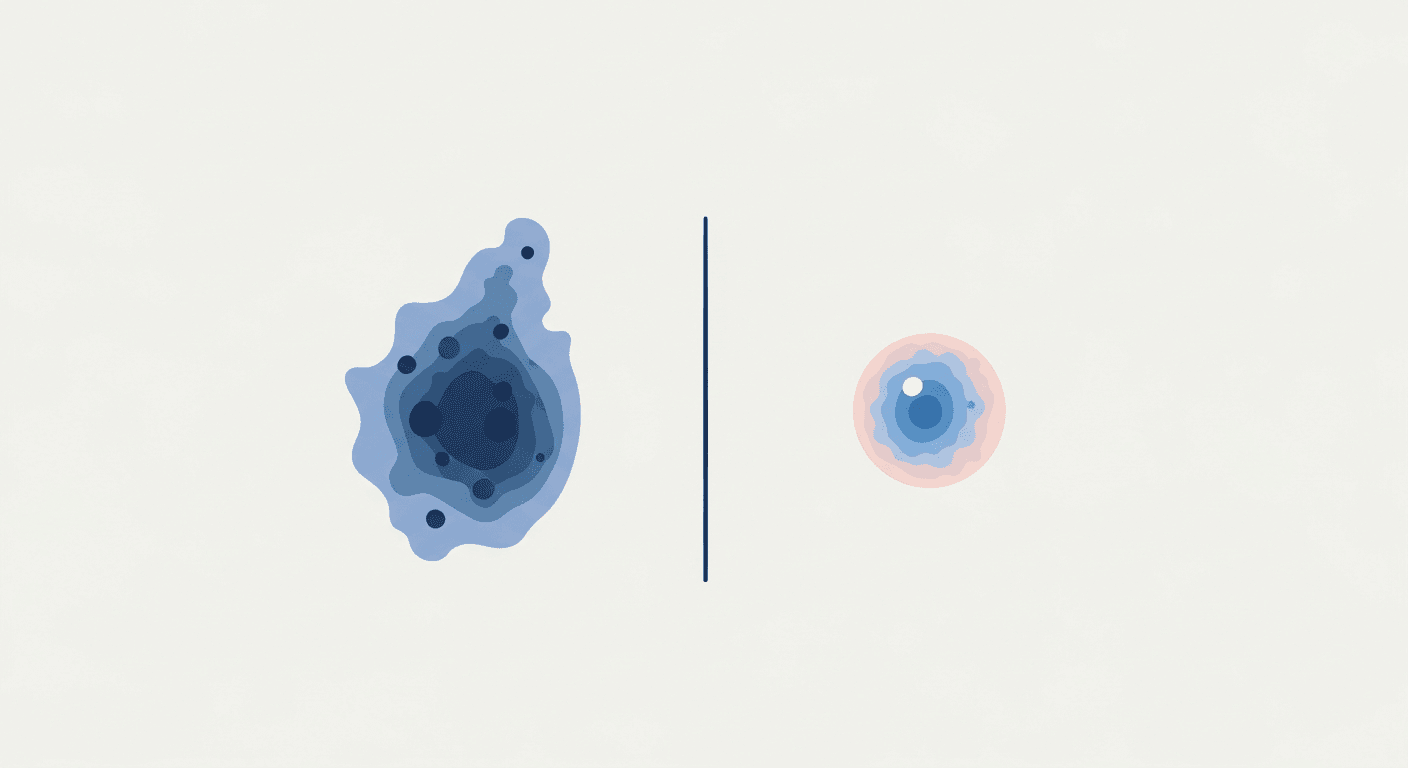
A benign mole is usually symmetrical, meaning both halves are the same if you draw an imaginary line through the middle. The mole appears round or oval and is evenly shaped. If you divide it in the middle, the two halves will mirror each other. This is a sign of controlled and even cell growth.
A melanoma is often asymmetrical and irregularly shaped. If you try to divide it in the middle, the two halves will look different. It may show an uneven distribution of color or shape, indicating uncontrolled growth of pigment cells. Asymmetry is an important warning sign and should always prompt further investigation.
8. The ABCDE Rule: B for Border
The second criterion of the ABCDE rule focuses on the outer shape and demarcation of the mole from the surrounding skin. This is a crucial feature for distinguishing between harmless and potentially dangerous lesions.
B – Border:
Benign moles have a sharp, smooth, and regularly shaped border. Their edge is clearly defined and stands out distinctly from the surrounding skin, without any extensions or irregularities. This indicates orderly cell growth.
Melanomas often have irregular, blurred, notched, or jagged edges that can spread into the surrounding skin. The transition between the pigmented lesion and the normal skin is fluid and not clearly defined. Such uneven borders can be a sign of invasive growth of cancer cells. Look for indentations, notches, or the feeling that the mole is “frayed”. Early recognition of irregular borders is a key strategy. Also, dysplastic nevi can have irregular borders and should therefore be carefully observed.
9. The ABCDE Rule: C for Colour
The color of a pigmented lesion is another important feature to consider when self-assessing using the ABCDE rule. Changes in color perception can indicate a potentially malignant transformation.
C – Colour:
The color of a harmless mole is usually uniformly brown or skin-colored. It can be light or dark brown, but the color within the entire mole is homogeneous and without distinct shading. This is typical for the benign proliferation of pigment cells.
Melanomas, on the other hand, often show uneven coloration with various shades of brown, black, red, pink, blue, or even white. A mole that combines different colors or shades within itself (e.g., light brown, dark brown, and black side-by-side) is a strong warning sign. Blue or black areas are particularly suspicious as they can indicate deeper pigment deposits. Red and pink tones can indicate inflammation or bleeding, while white areas could indicate tumor regression. This is an important criterion for recognizing symptoms of skin cancer.
10. The ABCDE Rule: D for Diameter
The size criterion “Diameter” provides an initial indication, even though a melanoma can also be smaller in its early stages. It is an easy-to-measure and observe feature during regular skin checks.
D – Diameter:
Benign moles are usually smaller than 6 millimeters. This is about the size of a pencil eraser. They rarely grow beyond this size in adulthood and remain stable in their expansion. Most people have numerous smaller moles that remain unchanged for years.
Melanomas are often larger than 6 millimeters, but can also be smaller, especially in early stages. Any growing mole, regardless of its current size, should be medically evaluated. It is crucial to consider not only the absolute size but, above all, growth. A new mole or an enlargement of an existing mole beyond 6 mm is a strong warning sign. Even though many large moles are harmless, diameter is an important factor for initial assessment and a criterion considered in optimal practice for melanoma detection.
11. The ABCDE Rule: E for Evolution – The Decisive Criterion
Hautkrebs (Melanom) oder harmloses Hautmal? Im Anfangsstadium erkennen. Dr. Kasten Mainz - YouTube
The criterion “Evolution” is considered the most important feature of the ABCDE rule. It emphasizes that changes over time are the most critical warning sign for malignant melanoma, even if the other criteria are not yet fully pronounced.
E – Evolution:
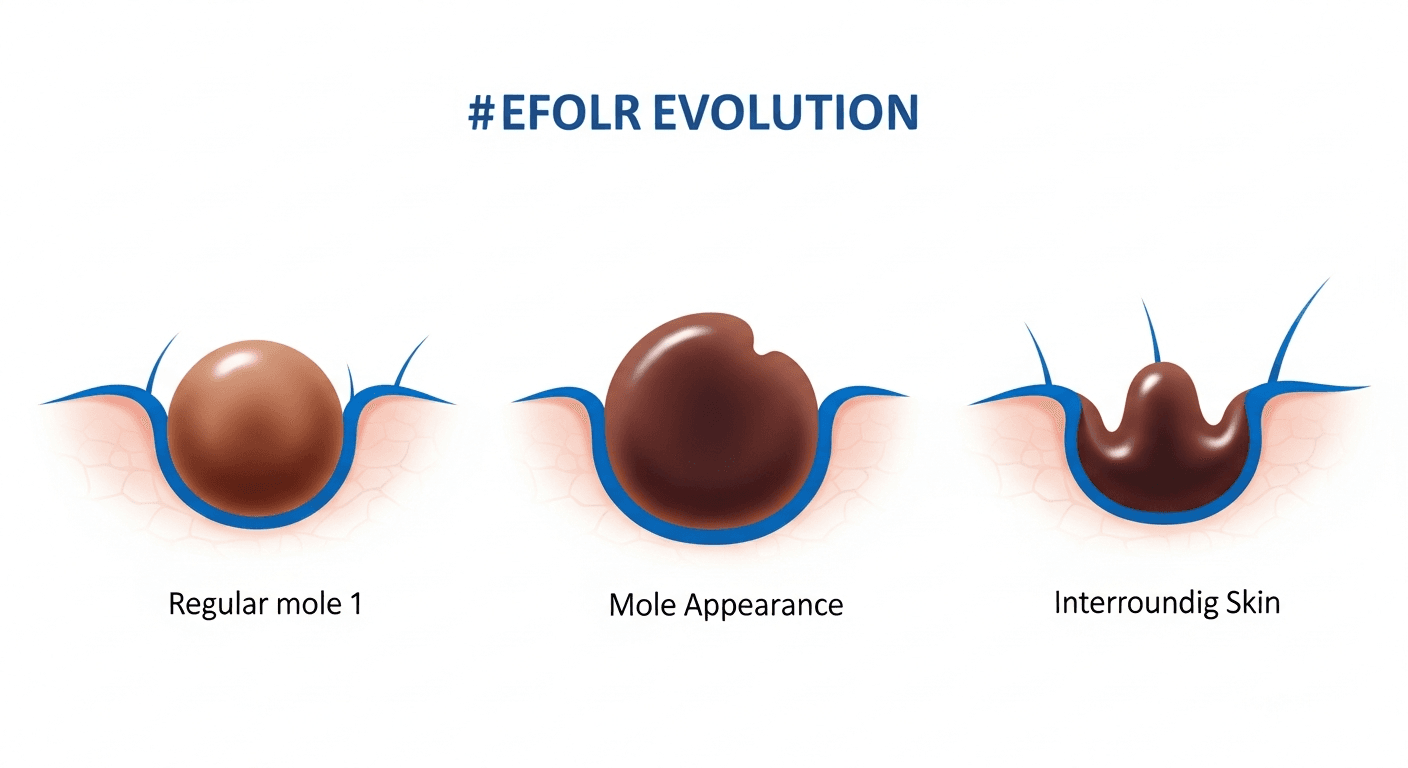
This is perhaps the most important criterion. A benign mole generally does not change significantly in size, shape, color, or elevation over time. It remains stable and causes no new symptoms.
A melanoma, on the other hand, can grow or change in size, shape, color, or elevation, or in other ways. Itching, bleeding, crusting, inflammation, pain, or a new elevation on a mole are also alarming warning signs that require immediate medical clarification. Any noticeable or visible change over weeks or months that cannot be explained by an injury should lead you to a dermatologist. The Charité's patient information on melanoma underlines the importance of this criterion. In addition to the ABCDE rule, the “Ugly Duckling” sign is also mentioned as a helpful criterion for the early detection of cutaneous melanoma – a mole that looks different from all others.
Consult a dermatologist immediately if you notice one or more of the ABCDE criteria on any of your moles or any other worrying skin change. This also includes:
- Itching or burning
- Bleeding or crusting
- Pain or tenderness
- A non-healing wound
- Sudden appearance of an unusual mole
12. Other Skin Cancer Types at a Glance: Basal Cell Carcinoma and Squamous Cell Carcinoma
Although this article primarily focuses on malignant melanoma, it is important to know that there are other forms of skin cancer. These are often referred to as “non-melanoma skin cancer” and are generally less aggressive but still require treatment. Understanding their characteristics helps with holistic skin care.
Basal Cell Carcinoma (BCC):
This is the most common form of skin cancer, accounting for about 80% of all non-melanoma skin cancer cases. BCC grows slowly and rarely metastasizes to other body regions. It originates in the basal layer of the epidermis and is almost always due to chronic UV exposure. Typical signs are pearly nodules, often with fine blood vessels (telangiectasias) on the surface. It can also appear as a raised, reddish, or skin-colored lesion that bleeds easily or crusts over. A non-healing wound that repeatedly breaks open can also be a sign. The prognosis is excellent if completely removed.
Squamous Cell Carcinoma (SCC):
This is the second most common form of non-melanoma skin cancer. It originates from the squamous cells of the epidermis and is also closely linked to UV radiation. Unlike BCC, SCC can metastasize in advanced stages, though this is less common than with melanoma. It often appears as a reddish, scaly, or crusted lesion that can sometimes ulcerate and grows rapidly. Actinic keratoses, rough, scaly patches on sun-damaged skin, are considered a precursor to squamous cell carcinoma and should also be treated. The prognosis and development of non-melanoma skin cancer differ from melanoma but still require accurate diagnosis and treatment.
Summary of Patient Information:
Although BCC and SCC are generally less dangerous than melanoma, early diagnosis and treatment are also crucial here to avoid major operations and potential complications. Regular skin checks are therefore essential for all types of skin cancer.
13. Modern Treatment Methods: A Ray of Hope for Advanced Melanoma
The therapy for malignant melanoma has made enormous progress in recent years, particularly through the development of targeted therapies and immunotherapies. These innovations have significantly improved the prognosis for patients with advanced melanoma and offer new hope.
- Immunotherapies: These therapies, especially checkpoint blockade, have significantly improved the prognosis for patients with advanced melanoma and in some cases even enable a cure. They aim to activate the body's own immune system to fight cancer cells. Anti-PD1 antibodies are a prominent example here.
- Targeted Therapies: For melanomas with specific gene mutations, such as BRAF mutations (which occur in about half of melanoma patients), targeted drugs (BRAF and MEK inhibitors) are used. These block specific signaling pathways in tumor cells, thereby inhibiting their growth. The S3 guideline for melanoma, which is planned for updating in 2025, will comprehensively review the new data on these modern therapies.
- Adjuvant and Neoadjuvant Therapies:
- Adjuvant Therapy: After complete surgical removal of the melanoma, supportive (adjuvant) therapies can be used for high-risk melanomas to significantly reduce the risk of recurrence. These include anti-PD1 antibodies as well as BRAF and MEK inhibitors for patients in AJCC 2017 tumor stage III A-D, and anti-PD1 antibodies also for stage IV.
- Neoadjuvant Therapy: There are also promising studies on neoadjuvant therapy concepts, where drugs are used before surgery. For example, dual neoadjuvant immunotherapy has already shown improved event-free survival (EFS).
- mRNA Vaccines: A promising area of research is mRNA vaccines, which have the potential to prevent recurrences after immunotherapy with checkpoint inhibitors. This represents an important step towards personalized medicine and could further improve the long-term prognosis.
14. AI and Digital Diagnostics in Dermatology: The Future with DermCheck
The digitalization and the use of Artificial Intelligence (AI) are revolutionizing dermatological diagnostics and offer great potential for the early detection of skin cancer. Especially for tools like DermCheck, this opens up new possibilities to make early detection more accessible and precise.
- Non-invasive Imaging: Methods such as confocal laser microscopy (KLM) and optical coherence tomography (OCT) are already established in specialized clinics and practices. They enable a detailed view of skin structures without the need for a biopsy and provide high-resolution images that are ideal for AI analysis.
- AI-based Algorithms: The data generated by these imaging procedures are excellently suited for the application of AI-based algorithms. These algorithms can increase diagnostic accuracy and support experienced users in their assessment. They learn from vast datasets of mole images to recognize patterns typical for melanomas. Studies confirm the high diagnostic precision of AI in detecting skin cancer (Source: PubMed).
- Raman Spectroscopy: A study showed that Raman spectroscopy combined with neural networks could achieve high sensitivity (85%) and specificity (99%) in the *ex vivo* diagnosis of melanomas compared to non-melanoma skin cancers. *In vivo*, sensitivities of 90% and specificities of 64% were achieved. This technology promises an even more precise characterization of skin lesions.
- Digital Dermoscopy and Teledermatology: Digital dermatoscopes enable the storage and comparison of mole images over time, which greatly facilitates the detection of changes (criterion E of the ABCDE rule). Teledermatology, where images are sent to specialists for assessment, can improve access to experts and reduce waiting times, especially in rural areas. AI systems can serve as pre-screening tools here to identify suspicious lesions and assess the urgency of a medical examination. Advances in at-home early detection are particularly promising.
Advantages and Challenges:
AI systems like DermCheck can analyze large amounts of image data quickly and consistently, which can reduce human error. However, they are tools to support the physician and do not replace the experienced eye and clinical expertise of a dermatologist. The development and validation of these systems require large, high-quality datasets and continuous research to further optimize their reliability and applicability in clinical practice.
- Increased Precision: AI can detect subtle patterns that are difficult for the human eye to see.
- Faster Analysis: Large amounts of image data are evaluated in a short time.
- Support for Doctors: AI serves as a valuable second opinion system.
- Better Access: Teledermatology and AI provide access to diagnostics, even in rural areas.
15. Your Role: Regular Self-Examination and Professional Screening
Find skin cancer: How to perform a skin self-exam - YouTube
The ability to observe your own skin and recognize suspicious changes is one of the most important measures to protect against skin cancer. The good news is that most melanomas, if detected early, can be completely cured. Your active participation is crucial for your skin health.
Regular Self-Examination of the Skin:
Perform a thorough self-examination of your skin once a month, preferably after showering or bathing in good lighting. Use a full-length mirror and a hand mirror for hard-to-see areas. Pay attention to all parts of your skin, including your scalp, soles of your feet, between your toes, nails, and mucous membranes. Look for new moles or changes in existing moles. Don't hesitate to ask a partner or family member for help examining hard-to-reach areas. There are specific instructions for self-examination that you can use. The importance of self-examination as part of early detection cannot be overemphasized.
Professional Skin Cancer Screening:
Remember to undergo skin cancer screening every two years from the age of 35. This examination is performed by dermatologists or trained family doctors. It is an important addition to self-examination, as specialists can detect even the smallest or hard-to-see changes. The Krebsinformationsdienst offers comprehensive information on the benefits and procedure of screening.
The combination of regular self-examination and professional screening offers the best protection against skin cancer. Be vigilant and do not hesitate to seek medical advice if you have any suspicions. Your skin remembers everything – but you can learn to protect and observe it. Invest in your skin health, it is your largest organ for life.
16. Conclusion and Important Note
Malignant melanoma is the most dangerous skin cancer, but with early detection, it is almost always curable. UV radiation is the main risk factor, so sun protection and avoiding tanning beds are essential. Regular self-examinations of the skin using the ABCDE rule and professional skin cancer screenings by a dermatologist are your best tools in the fight against skin cancer. Modern technologies such as DermCheck's Artificial Intelligence support you and your doctor in detecting suspicious skin changes even more precisely and earlier, allowing for quick action if necessary.
Be vigilant and do not hesitate to seek medical advice if you have any suspicions. Your skin remembers everything – but you can learn to protect and observe it. Invest in your skin health; it is your largest organ for life.
Important Note:
This article has been prepared with the greatest care and based on current medical knowledge and guidelines. It serves for general information only and does not replace individual medical advice, diagnosis, or treatment. DermCheck's Artificial Intelligence is a supportive tool for early detection and does not replace the clinical examination and expertise of a qualified dermatologist. For specific questions about your skin health, please always consult a qualified dermatologist or medical professional.
Quellen & Studien (35)
- krebsdaten.de
- krebsdaten.de
- krebsdaten.de
- gelbe-liste.de
- aerzteblatt.de
- der-privatarzt.de
- barmer.de
- hautkrebs-netzwerk.de
- wcrf.org
- skincancer.org
- aimatmelanoma.org
- aimatmelanoma.org
- krebshilfe.de
- aerzteblatt.de
- onko-portal.de
- leitlinienprogramm-onkologie.de
- krebshilfe.de
- selbsthilfe-hautkrebs.de
- springermedizin.de
- awmf.org
- leitlinienprogramm-onkologie.de
- awmf.org
- awmf.org
- nih.gov
- krebsdaten.de
- medmedia.at
- ker-sun.de
- gesundheitsatlas-deutschland.de
- ispor.org
- krebsdaten.de
- uni-tuebingen.de
- aerzteblatt.de
- nih.gov
- karger.com
- krebsgesellschaft.de